Active kids in our program
More children in active myopia management than any other independent optometry practice in central New Jersey.
500+
Childhood Myopia Control · Monroe Township, NJ
New Jersey's largest dedicated childhood myopia program — slowing your child's nearsightedness before it progresses, with a plan built personally by Dr. Miglani.
A personal welcome from Dr. Miglani
If your child was just diagnosed with myopia, the most important thing you can do in the next 90 seconds is press play. Dr. Miglani explains exactly what to do next — and why doing it now matters.
For over a decade she has been the face of pediatric myopia care across New Jersey: OD, IACMM-certified (International Academy Certification in Myopia Management), among the top myopia specialists in the United States, and one of the most experienced pediatric myopia specialists in the tri-state area.
Myopia Explained
Myopia, or nearsightedness, means your child can see nearby objects clearly, but things farther away appear blurry.
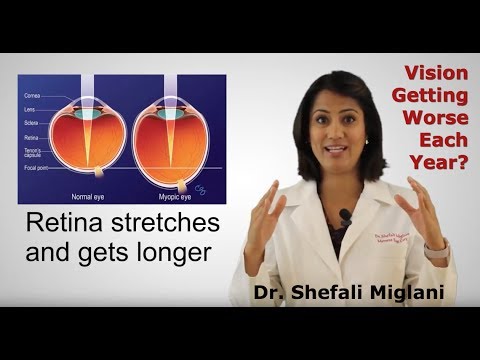
It happens when the eye grows slightly longer than normal, causing light to focus in front of the retina instead of directly on it. This makes distant objects look out of focus.
Myopia is a common vision condition in kids today, but with the right care and early management, its progression can be slowed — helping protect your child’s sight for the future.
If you have myopia, you have trouble seeing things far away, but you can see nearby things clearly. This is why myopia is commonly called nearsightedness.
If you can see well enough to read what’s on your laptop or in a book, but you struggle to see what’s on the television or a movie screen, you may be nearsighted. Sometimes people with undiagnosed myopia will have headaches and eyestrain from struggling to clearly see things in the distance.
Based on a study published in 2008, experts at NIH estimate that at least 33 percent of Americans are nearsighted. According to a 2009 study, the number of Americans with myopia has increased significantly from the 1970s to the early 2000s.
The prevalence of myopia has also been increasing in many other countries around the world. It is particularly prominent among school-aged children living in urban areas in some Asian countries. In the past, people thought children might become myopic from spending too much time reading and writing, which require close-up vision, or from reading in poorly lit rooms.
Myopia can also be the result of a cornea that is too curved for the length of the eyeball or a lens that is too thick. For some people, their myopia may be caused by a combination of problems in the cornea, lens, and length of the eyeball.
More recent studies confirm that myopia, especially in kids between 8–14, is growing at epidemic proportions. Recent studies suggest that the increase of myopia in children could be related to a decrease in the amount of time they spend outdoors.
Video library
Myopia Treatments We Offer
Managing myopia early helps protect your child's vision as they grow. Our team will guide you through the safest and most effective treatment options available.
Real families. Real outcomes.
The parents we work with often say the same thing: I wish we'd known sooner. These are their stories.
 2:14
2:14
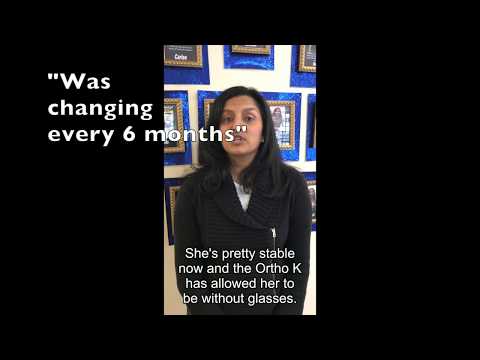
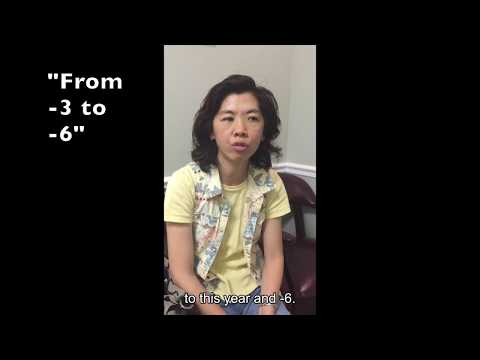
"Our daughter's worsening vision hasn't changed in a year — that was the first time."
 3:02
3:02
"Her vision is so much clearer now — and Bethany has so much more confidence."
 1:48
1:48
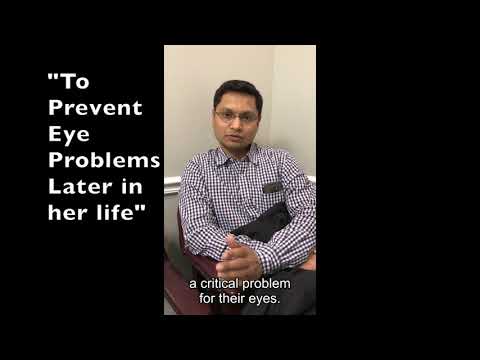
"Perfect for kids with a very high prescription — and for preventing bigger problems later in life."
"Here's exactly how I put my Ortho-K lenses in every night."
"Now I can swim, dance, and do so much more — without glasses."
"I started at -8. It has gotten so much better since."
"I don't have to hide behind thick glasses anymore — I can finally see clearly."
"I've tried many lenses. Ortho-K is the best — it's given me a better quality of life."
"I don't need to wear glasses anymore, which is pretty awesome."
"We're ecstatic with the results — Krish's vision hasn't changed at all."
"Sports glasses kept fogging up during water polo. This was perfect for me."
"So simple and easy to use — I absolutely recommend it."
Dr. Shefali Miglani is an Optometric Physician and Myopia Control Specialist with over 20 years of private practice experience. She is the Director and Founder of the Myopia Care Center at Monroe Eye Care, dedicated to helping children and families understand and manage myopia (nearsightedness).
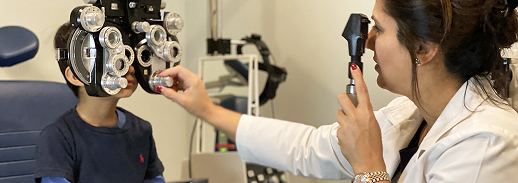
Dr. Miglani earned her undergraduate degree from Rutgers University, where she majored in Psychology and Chemistry and graduated at the top of her class. She was awarded the Henry Rutgers Scholar, the university’s highest academic honor, recognizing exceptional academic excellence.
She went on to earn her Doctor of Optometry degree from the prestigious State University of New York (SUNY) College of Optometry, graduating with highest honors. Following her studies, Dr. Miglani gained valuable clinical experience in Brooklyn and at a community health center in lower Manhattan, serving a diverse range of patients and complex eye care needs.
A dedicated professional and active member of the optometric community, Dr. Miglani is affiliated with:
With extensive training and expertise in myopia control for children, Dr. Miglani is a trusted doctor and sought-after speaker among parents who are passionate about preserving their child’s vision and ocular health.